 |
|
- Contact
us Other instruments: - Measures
-
Scales |
 |


|
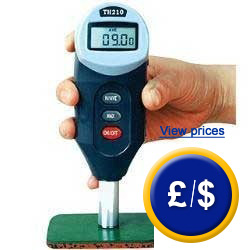
PCE-HT210 (Shore D)
Hardness Tester |
|
|
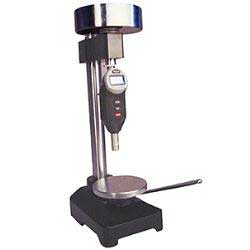
The PCE-HT200 (Shore D) hardness tester is used as a portable device for measurements at the workplace, such as testing materials in a laboratory. The hardness tester comes with a measurement component and a digital display with a resolution of only 0.2 hardness units. The hardness tester can be used as a handheld device in production or in stationary mode if placed in the test position. The hardness tester comes calibrated from the manufacturer and includes an ISO calibration certificate. If you return the device accompanied by the ISO calibration certificate, it will be recalibrated for an extra price. The device has an RS-232 interface which, when used in conjunction with optional software, can allow for data to be transferred to a computer. |
|
|
- Pocket sized - For stationary or portable use - Meets hardness standards - Peak hold function - Auto shut-off after 5 minutes of inactivity - Low battery warning - Used for line or series measurements (for - optional software for data transfer - optional ISO calibration certificate |
|
| Technical specifications | |
| Measurement range | 0 to 100 |
| Resolution | 0.2 of a hardness unit |
| Accuracy | ±1 hardness unit |
| Measurement values shown | actual hardness, maximum value, average value (retains maximum value) |
| Interface | RS-232 |
| Software and data cable | optional |
| Other functions | auto shut-off, low battery inidcator |
| Power | 3 batteries of 1.5 V (SR 44) |
| Operating time | approx. 300 h |
| Operating temperature | 0 to 40°C |
| Dimensions | 173 x 56 x 42 mm |
| Weight | 233 g |
| Delivery content: 1 x PCE-HT210 hardness tester, 3 x batteries, 1 x case, 1 x calibration certificate and user manual |
|
| Optional accessories - RS-232 to USB adaptador |
|
|
- Test position |
|
|
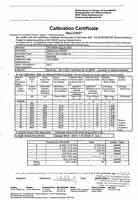
- ISO calibration and ISO calibration certificate |
|
 |
 |
|
Here you will find an overview of all the measuring instruments available at PCE Instruments. |
|
|
Contact: |
|

|
Below you will find an overview of the different product groups of measuring instruments |
||||||||||||||||||||||||
|
|
|
|
|||||||||||||||||||||