 |
|
- Contact
us Other instruments: - Measures
-
Scales |
 |


|
FMC Humidity
Detector for Building Materials |
||
|
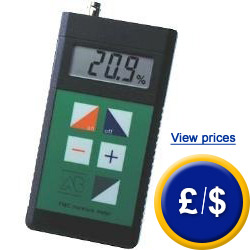
The FMC humidity detector can accurately measure absolute humidity in diverse building materials. To detect humidity, the FMC humidity detector has a connection for external sensors which can either be inserted into the building material or placed on it. This detector corrects the measured humidity value in real percentages in relation to the selected material and the temperature (according to dry/absolute humidity). The humidity detector can be used both in input controls and to measure on site: concrete, asbestos, cement, plaster, lime-stone, pavement, bricks, etc. The FMC humidity detector has some characteristic curves stored to measure different materials. These curves can be displayed by accessing them through the keyboard. |
||
|
- High accuracy |
 View or print user manual of the FMC humidity detector  |
|
|
Characteristic material curves/Temperature compensation |
||
|
With the FMC humidity detector for building materials it is possible to determine with high accuracy the real moisture content by introducing the corresponding characteristic value of every material (for the characteristic curve of the stored material) in the detector. Some charts with more than 500 characteristic values for wood, building materials and paper will be included in the delivery. |
||
|
Softwood |
Deciduous wood |
|
| Technical specifications | ||
| Measurement ranges | 5 ... 99 % H2O for wood 0 ... 99 % H2O for building materials |
|
| Resolution | 0.1 % | |
| Accuracy | 0.3 % | |
| Measurement depth | depends on the selected sensor | |
| Measuring principle | measurement of resistance humidity | |
| Temperature range | 0 ... 50 °C | |
| Power | 1 x 9 V battery selectable Auto Power Off to protect the battery |
|
| Dimensions | 160 x 80 x 30 mm | |
| Weight | 260 g with the battery included | |
|
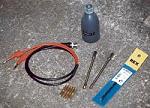
Delivery content: |
||
|
Additional devices |
||
 UK customers +44(0) 23 809 870 30 /
 |
|
|
|
|
|
|
|
|
|
|
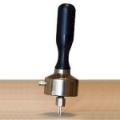
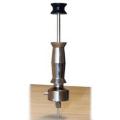
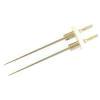
It is hooked up with both plugs to the universal probe holder. Humidity is measured by the two ends of the pins. It is very suitable for great diameter woods, beams, timber planks as well as for diverse insulation materials and fiber or for light building foam materials as foams. |
|
|
|
|
Here you will find an overview of all the measuring instruments available at PCE Instruments. |
|
|
Contact: |
Contact: |


|
Below you will find an overview of the different product groups of measuring instruments |
||||||||||||||||||||||||
|
|
|
|
|||||||||||||||||||||