
|
|||||||
|
|
|||||||
|
- PCE-PM...T series
Density Scales with determination kit |
 |
||||||
|
- PCE-LSM series Density Scales
with
determination kit |
 |
||||||
|
- PCE-LS series Density Scales
with determination kit |
 |
||||||
|
- PCE-ABZ 200C series Density Scales
with
determination kit |
 |
||||||
|
- PCE-AB-C series Density Scales
with determination kit |
|
||||||
|
-
PCE-AB series Density Scales
with determination kit |
|
||||||
|
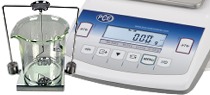
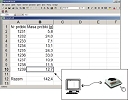
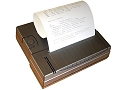
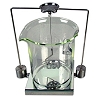
The usage and application of this kind of the density determination kit are nearly unlimited. The density determination kit have a lot of additional accessories like the software package program (consisting of the software and data cable) to transfer the data to a computer or printer. |
|||||||
An easy possibility to measure density in a labor includes determining the mass and volume of a corpus. Then you have to calculate like in the following: density [kg/m³] is equal to the mass [kg] divided by the volume. Volume in liquids is measured according to the usual process of determining volume. The use of flasks, cylinders and Pasteur tubes are useable determine volume in liquids. The volume of solids can often calculate, because of their shape (for example a cube). Another possibility is to put the corpus into a jar which has water until the edge in it. Then you can measure the displaced water. Density calculation with hydrostatic scales: According to Archimedes Principle, an object completely immersed in a fluid (liquid or gas), displaces a volume of fluid which equals the volume of the object. The weight of that volume of displaced fluid is the buoyant force which affects the object. Besides, the principle states that the buoyant force, affecting the object, placed in a fluid is equal to the weight of the fluid displaced by the object. |
|||||||
|
If you wish to view or print a selection of density scales from our catalogue, click PDF symbol: |
|||||||
 UK customers +44(0) 23 809 870 30 /


|
|
|
You are currently at: Home/measuring instruments and test equipment/scales and balances/Density Scales |
|
If you have any questions, call our offices on: |
