Here you will find
multimeters for measuring electrical magnitude in different fields of
electronics. All multimeters have a large, clear display and fit easily in the palm of the hand making them easy to handle.
multimeters are used, above all, in professional training, in education, the industrial sector and in
workshops. They are invaluable to professionals due to their high level of
accuracy. Here you will find all types of
multimeters for taking measurements of low and high voltages. We offer devices that have manual or automatic range selection and with or without an RS-232 interface for transferring data to a computer for further
analysis. The corresponding test cables for
multimeters come with the device as well as batteries so that it is ready to use straight out the box.
multimeters can be accompanied by an ISO calibration certificate
either when it is ordered or included as part of an annual recalibration. This allows them to be integrated into the group of internal testing tools of a
company.
multimeters of electrical values in several industries of the electronically sector you will find
here. All
multimeters are equipped with a clear display and have a user-friendly screen. multimeters
are preferred in vacational traineeships, in educational institutions, in industry and
craft-trade. Especially in the professional sector, because of their high
accuracy,
multimeters are used very often. Here you can see multimeter models with manual or automatic range with or without RS 232. An Interface for Data transmission on a PC is
integrated. The delivery content contains always the corresponding test cables. Beside standard
multimeters you will find multimeters with a lot of different measuring functions in our product
range. Beside the measurement of voltage and electricity, with
these multimeters it is possible to measure resistance, capacity, and inductance
exactly. You will also find
multimeters with oscilloscope function or multimeters that are launched as
table-multimeters, in our portfolio. Either with the initial delivery or with the continuous
(e.g. annual) recalibration, the
multimeters are able to be equipped with an ISO certification. The multimeters are able to be integrated into your internal ISO measuring instrument
tool.
As it has been said before these measuring instrument have many different
options and functions. Some of them have the same functions like on oscilloscope
others have similar functions like a clamp meter, which is used to measure
voltage. They multifunctional tools that can be used in many fields of
construction purposes but also in laboratories. If you can't find the multimeter you are looking
for, please contact us and we will help you to find the best solution to suit your needs by calling our
offices: UK customers +44(0) 23 809 870 30 / US customers (561) 320-9162 our technical staff will advise you regarding our measuring instruments. Our engineers and technicians will be happy to help you with the
multimeter, and of course, with the other products in the field of regulation and control, and scales and balances.
(To detect insulation faults and untimely tripping of RCDs caused
by leakage currents)
- PCE-PCM1 series
Clamp Meters (Gadgets with internal memory, USB port and software / three-phase / energy meter /
TRMS)
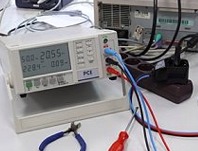
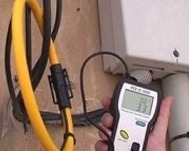
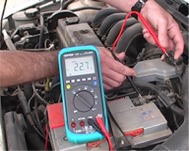
Some Digital Multimeters in use
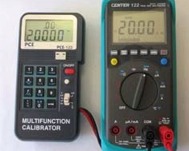
Calibrating
one of our Multimeters using
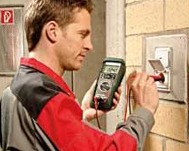
Testing
the voltage in a cable at a distance
Analysing
a switch using
PCE-123 series Multimeters.
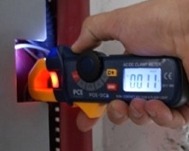
using the PCE-DC3 series multimeters.
METRAHIT Extra series multimeters.
Testing
the voltage of a station
Comprobating
current cables
Testing
electrical ground of a vehicle using
using PCE-PA6000 series multimeters.
using PCE-EI-3000 series multimeters.
PCE-DM 22 series multimeters.
General information about
multimeters: The easy mechanical construction and electrical components that are build in bulk production, are important advantages of
these instruments. Therefore, these gadgets are very affordable. In addition to
that these multimeters are equipped with a protection circuit for overload and wrong polarity.
Our instruments are nearly indestructible in the voltage measuring range. Collisions as well as crashes do not harm them
because there are no movable parts outside the multimeters. Few measuring
instruments show measuring options for frequencies, capacities, inductance as well as transistor and diode characteristics.
By having sensors that measure sound, luminous intensity, humidity and
temperature included, a few multimeters are not only designed for electrical values. With external sensors, which come with voltage outputs, the range of possible applications can be enlarged. Beside air humidity, sound, illumination or temperature measurements, the
multimeters are able to measure further values of mechanical speed, pressure, air velocity and voltage, via a clamp.
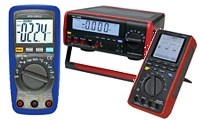
Multimeters are offered in several forms and types. Pen multimeters or voltage meters with multimeter function are used by craftspeople which carry out small measurements. Handheld multimeters are mostly used in classical
multimeters designs with a display in the upper part, the multifunctional rotary switch in the middle of the
multimeters and a test cable in the lower part of the multimeters. These multimeters are mostly used by maintenance professionals as a universal measuring instrument. Table or laboratory multimeters are used in stationary workplaces. These
multimeters usually have a larger display and are able to be provided with 230 V AC. Further categories of multimeters are measuring ampere callipers with multimeter functions or oscilloscopes with multimeter function. The measuring range on the
multimeters will be mostly set automatically or by hand.
Multimeters are divided into two groups of multimeter: Multimeters and analog
multimeters. In the following part the characteristics will be described: Multimeter with an analog display can be found in
Analogue Multimeters. The Multimeter is used for measurements of voltage and electricity. Beside these functions this modern multimeter owns the characteristics to measure capacity, inductance, resistance and temperature. The multimeter also includes an continuity and diode tester. Measured values will be measured via an AD transmitter and will be shown on the display. Beside the numerically display, the display of values can be shown on a
baragraph. The user is able to sort the values into a range of measuring, much more easier. This is a great advantage of
multimeters. The multimeter generates an analog display like it's known from analog
multimeters.
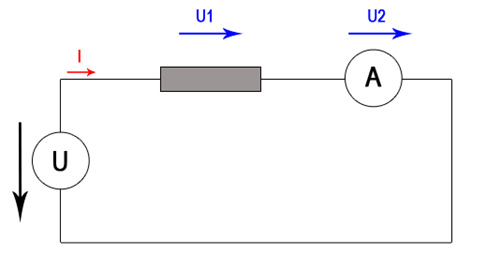
Principle: Measurement of currents with a multimeter:
Voltage will be measured in series. That means that you have to interrupt the normal current circuit so that current will flow. The resistance inside of the device is really low resistive. This is important for non falsified measurements.
On multimeter usually three sockets are available:
1. "COM" adaptor for ground wire, always required
2. mA to measure flows in mA ranges this bush will be used
3. 10A to measure great flows in the A-range this bush will be used
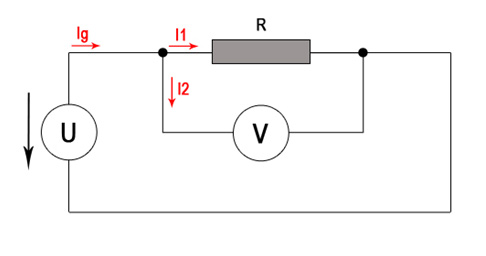
Principle: Measurement of voltage with a multimeter:
Voltages will be measured parallel to circuits. The multimeter will measure
around the component whose values are desired. Mostly, voltage will be measured
in reference to earth. In this case multimeter are highly resistive.
On multimeters there are two sockets available.
1. "COM" connection for ground wire, always required
2. "V/Ω " to measure voltage
Principle: Measurement of
resistance with a multimeter
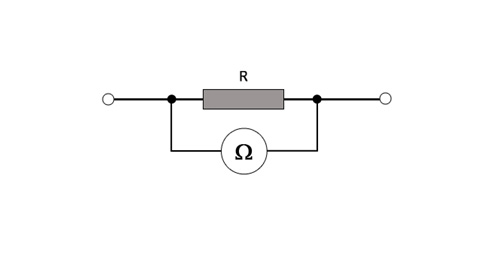
To measure resistance with the multimeter the test prods will be placed on both
sides of the component. The multimeter usually doesn't measure resistance.
Therefore it uses the Ohm's law. In this formula resistance will be the product
of voltage/current. These both values can be determined. Resistance can be
detected by this calculation.
On multimeter two sockets are available.
1. "COM" adaptor for ground wire, always required
2. "V/Ω " to detect resistance with multimeter
If you wish to view or print a
selection of our multimeters from our catalogue, click the PDF symbol.
If you have any questions, call our offices on: UK customers +44(0) 23 809 870 30 US customers (561) 320-9162
This page in German in Italian in Spanish in Croatian in French in Dutch
in Hungarian
in Polish in Bulgaria in Czech Republic
in Russian in Turkish and
in Portuguese .
Below
you will find an overview of the different product groups of measuring
instruments



 UK customers +44(0) 23 809 870 30 /





 in Hungarian
 in Bulgaria
  in Czech Republic
  in Russian
  in Turkish
