PCE Instruments offers a wide range of balances: industrial balances, laboratory balances, precision balances, table top balances and many more. All of balances possess the characteristics and performance necessary to take measurements quickly and safely, and they
come with a 2 or 3 year guarantee depending on the model. A lot of our balances can transfer data to a computer for
further analysis, some have piece count functions and others hopper functions.
The
balance some calibrated and can also come with a DIN ISO certificate. Also, if required our calibratable models can be
adjusted to suit your needs. Call us if you cannot find the balances you are looking for to perform the job effectively: our offices can be contacted on +44 (0)2380 987030 or you can request a copy of our catalogue of balances (printable version) in which you can browse our vast selection of balances at your leisure and compare the various models.
Below there is a selection of our balances balances in a general index with links to the corresponding products where you will be able to see some images of specific products we carry in this range which will help clarifying the types of instruments you may be looking for. Other information regarding balances can be found at
"other information and links".
Our balances, depending on the model, meet all technical requirements and weighing standards within all industries. As part of our balances, we have optional accessories available. The images below illustrate some examples of these accessories.
Software kit
Printer
Density
Calibrations weights
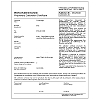
A legal verification of balances (only for verifiable models) can be done by us (class II and class III) or by an authorised verification centre for class II. Once an authorised verification has been performed, the balances cannot be calibrated when using an external calibration weight.
An authorised verification is valid for 2 years, at which point a verification must be performed annually. For companies that have an internal control or external audits, it is acceptable to perform an annual ISO calibration. The ISO certification comes with an additional document containing the test values. The certification can also include the company's address and details.
Balances can determine weight as well as other units
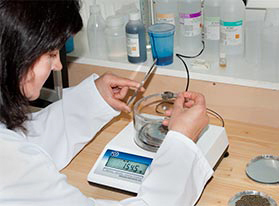
Balances are used to determine the weight of a particular body or the magnitudes related to weight, such as volume or density. The determination of weight is very important in many sectors, especially within the production and the commerce. The examples of how to use our balances are listed below:
Alphabetical information and links about balances Together
with our range of balances and the professional assessment of our engineers and
technicians, we also provide an alphabetical list of relevant terminologies to
help our customers in familiarising with our products before purchasing
them.
A
Absolute density:
determination of the weight of an object in units of milligrams (mg), grams (g),
kilograms (kg) or tons (t).
Accurate
weighing balances:
Accurate scales can be found in our general index. Their accuracy, wide weight range as well as their high quality, are the most valuable factors which convince customers to buy our products.
Adjust:
establishing an exact magnitude of measurement in a device, such as a scale, by
technically intervening with the measurement system.
Adjust weight range:
this can be done by using a control weight and the adjustment setting (CAL), or
with an internal automatic adjustment connection. This is required due to
changes in temperature, changes in ambient conditions, location change, etc.
This adjustment should be done routinely throughout the day.
Analytical
scales: In our product range you will find analytical scales which come with software and the possibility to measure with an accuracy of 0.01 mg (more analytical devices are available upon request).
Authorisation
of adjustments to balances: calibrations of balances are documented once
the device has been authorised. The device must first be submitted to a
technical calibration test which is done by an official organisation, usually a
state meteorological institution. The technical requirements of the measurement
and the specifics of the device are taken into consideration. This authorisation
is documented with an EU certification (IEC Type approval certificate). This EU
authorisation is valid across all member states of the EU.
Authorisation
of balances: this is carried out by the PTB Federal Office. Balances can
only be adjusted if there is an authorisation for this format.
B
Balances for
analysis:
In our product range we offer scales for analysis which come with software and the possibility to read to an accuracy of 0.01mg (more accurate devices are available on request).
Balances for colleges:
On our website you will find six types of scales for colleges. Our scales for colleges can be used by professionals, at home, for hobbies and at school. They can be powered by batteries or an optional mains adaptor.
Balances for dentistry:
On our website you will find scales for dentistry to calculate the weight of the golden teeth. Weighing units (grams, carats or even %) can be chosen in some models of scales for dentistry.
Balances for gold :
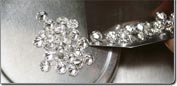
On our website you will find a wide range of scales for gold for weighing both gold and jewels, with an option to choose weighing units (grams or carats). All our scales for gold can be verified.
Balances for people:
Scales for people are used to measure and determine the people’s body weight. The weight range for scales for people is from 0 kg up to 150 kg, and sometimes up to 200 kg.
Balances for school:
On our website there are six different types of school scales, including scales for professional use, home, leisure as well as schools. You can choose to power scales via the mains (optional) or by batteries.
Balances for transit:
The scales for transit consist of a ribbed, non-skid plate, four moveable weighing cells and easy to use terminal. Optional accessories for our scales for transit are available, such as: an access ramp, a wall mount, floor plates, a long cable, tripod and tripod base.
Balances for weighing pallets:
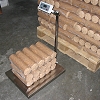
With our class III scales for weighing pallet you will be able to weigh loads directly from the loading ramp. By using scales for weighing pallet you will save time, shorten the path with full pallets, and you will also reduce the number of employees who work with pallets.
Balances with a support:
Scales with a support are in fact tabletop scales with an optional support for the indicator (except in PEC-PB series). On our website you will find a wide range of scales with a support, such as: scales with weight range up to 300 kg, verified or non-verified scales and those with a high resolution.
Balances with counter:
Among the wide range of products that we offer you may find scales with counter, scales to weigh items, reference scales or verified industrial models for professionals.
Balances with software:
A lot of our scales with software have got RS-232 - an interface for the data transmission. With the help of the connection to the optional software or the data cable you can transfer the weight data directly to the computer or printer.
Basic balances :
All types of scales for kitchen usage can be found within our basic scales section. Basic scales possess many advantages including their ease of use and a tare function which makes it easy to put together ingredients for recipes.
C
Calibration:
According to EU directives 90 / 384 / EWG, all balances should be officially
calibrated if they are going to be used in: a) Commercial ventures where the
cost of a product is determined by its weight. b) The manufacture of
medicines in pharmacies, such as in the analysis in medical laboratories or
pharmaceuticals. c) For determing fees, tariffs or official fines, also for
technical expertise in court cases. d) The manufacture of packaging. All
balances are tested in an authorised calibration centre and are identified with
a calibration mark. This marking corroborates its accuracy within the tolerance
frame of calibration. The scope of EU calibrations extends across all the member
countries of the EU.
Calibration of balances with an automatic adjustment
or with an automatic connection. All the previously mentioned references lose
validity, which can be managed by an automatic adjustment after a calibration.
In this case the calibration is done independently of an enclosure.
Calibration value:
measured by the calibration tolerance according to the type of balances, between
1 and 10d.
Calibrate: to establish a
correction of the magnitude of measurement in a device without intervening in
the system of measurement. Example: testing of balances with a test weight. The
term 'calibrate' used to mean 'adjustment'. Laboratories for calibrating balances.
Calibrated / non-calibrated balances:
in respect to technical measurements, they are almost identical. In case of
balances which can be calibrated, some prescribed specifications exist, such as
software modifications or additional labels.
Capacity indicator:
a luminous band ascending on the display indicates the occupied weight range and
the available range. It eliminates the risk of intentionally going out of range.
Minimum load (min):
lower limit of an adjustable measurement range. It can be found indicated on the
adjustment plate. Balances can also function below the minimum load.
Calibration certificate:
document containing the technical characteristics of balances or test weights,
which are traceable to a National Standard.
Certification according to DIN EN ISO 9001:
the certification shows that a company meets with all the required quality
management system according to DIN EN ISO 9001 standards. After consulting the
appropriate authorities, a certificate can be obtained according to the quality
management system standard DIN EN ISO 9001.
Characteristic line of balances:
graphical representation of the weight indication of the balances with weight
control from zero up to a maximum load.
Commercial balances:
class III balances. These typically include shop balances.
Commercial weights:
weights of OIML within error limit class M3.
Compensation for electromagnetic energy:
electronic analysis balances and precision balances of higher quality operate
according to this measurement principle. The base constitutes the physical
effect of the energy experienced an electrical coil within current or permanent
magnetic field.
Control of the testing method:
performance of quality management systems according to ISO 9000 and others such
as the GLP. The method of measurement (scales) and the methods of control
(weights) have to be tested at defined intervals, to determine if a calibration
is required. This test should include documentation.
Conventional value of a weight:
effect of a weight on balances under ideal circumstances: material density
8000kg/m³, relative temperature 20°C, density of air during the measurement
1.2kg/m³. The conventional value of a weight is facilitated by
precision weights, and the present oscillations due to the density of air up to
±10% do not have to be taken into consideration.
D
Declaration of conformity:
the declaration of conformity documents that a product corresponds with EU
directives. In terms of electronic balances, they come with the CE certification
mark. Declaration of conformity for balances
Determination of percentage:
for example, the reference weight of a sample before drying it is 50g = display
of the scale at 100%. After drying, the sample is 40g = display of the balances
at 80% absolute (dry mass) or 20% relative (humidity).
DKD:
German calibration service. An authorised DKD laboratory for issuing
calibration certificates.
Division: in
digital balances, this is also called Reading capacity d. In non-mechanical
balances, the minimum value is indicated in a balances composed of lines and
figures that are read by way of an index or indicator.
Document of conformity:
when balances are calibrated a document of conformity is drawn up by the
authority carrying out the adjustments.
Dosing balances:
Many of our scales are used as dosing scales. The economic platform scales are giving way to special dosing scales which are more expensive. Solidity, wide weighing range and high accuracy are the main advantages of dosing scales.
Duration of the validity of a calibration of balances:
analytical balances of calibration class I, 2 years; precision balances of
calibration class II, 2 years; industrial balances of calibration class III, 2
years; all other classes, 1 year.
Duration of the validity of a calibration of weights: weights in error limit class E2, 4 years; weights in error limit class F1 - F2, 4 years; weights in error limit class M1 - M3, 4 years, weights in all other classes, 1 year.
E
EA:
European co-operation for Accreditation (previously WECC or EAL). Regulates the
mutual international recognition of DKD certificates for balances. Link for the EA.
Effects of air:
each body experiences a push of air, a loss of weight, that does not disappear
when using highly accurate weights. To neutralise this, in practice, a
conventional weight value is introduced. The effects of air should be taken into
consideration when weighing an object.
Error limit for balances:
refers to adjusted balances. The error limit refers to the permitted tolerance
which means the allowed deviation of weight. There is a difference between error
limits from the first adjustment and error limits used by the balances.
Error limits for weights / classes of error limit:
a weight's error limit corresponds with the permitted tolerance, which means the
largest allowed deviation from the nominal value. Error limit classes for
weights are established by OIML in a strict hierarchical manner.
Error limits when used:
they are the double of error limits for balances for their first adjustment.
They are the permitted error limits for balances in use.
External test weight:
(calibration weight), used to adjust or calibrate precision balances, also see
'Adjust weight range'. An external test weight can come with a DKD certificate.
F
Filter to adapt to ambient conditions: they filter the sudden movements increasing the number of internal measurement cycles in the balances or increasing the time of integration. It is additional security above the control status that is eliminated in a measurement value that is being read or printed too quickly. Different levels of filters can be adjusted. See also weighted value.
G
Gross weight: weight of an object including packaging and or the transport container see also Net weight and Tare.
H
Heavier / lighter weight: for testing quality: load the balances with a nominal weight - reset the tare to zero by pressing the TARE key, which saves the nominal value - all measurements taken will be shown in relation to the nominal weight.
High resolution balances: under this denomination are analysis balances and precision balances with a resolution of >100,000 digits. The resolution is calculated from the weight range: reading capacity d Example: weight range of 300g, at a reading capacity of 0.001g corresponds to 1mg, the resolution = 300,000 digits. Balances - Classifications of accuracy
Hook balances:
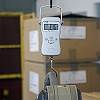
On our website you will find hook scales for the industry. Industrial hook scales have a big display which makes it easy to read the weight
properly.
Household
scales: Within our range of household scales you can find all types of scales for kitchen usage. Household scales have many advantages including their ease of use and a tare function making it convenient to put together ingredients for recipes.
Humidity
balances:
PCE humidity scales are designed for both industrial and professional sector. Humidity scales can determine the remaining dry matter after a drying process with infrared energy of the original matter which must be previously weighed.
I
Influence of temperature on balances: these are physical conditions and can only be corrected with internal device compensation. It is necessary to adjust balances after a change in temperature. >> Adjust.
Ingress protection (IP): the higher the number, the better protection against dust and water that the scale's enclosure has. IP 54 is standard for balances. Table of the types of Ingress Protection
Indication of an overload: shown on the display of balances when a minimum or maximum load is exceeded.
Industrial balances: this covers a wide range of balances, covering tabletop balances, platform, balances, crane balances as well as balances used for shipping and receiving.
Interface parameters: almost always RS-232 C. to connect directly to a computer or printer.
Internal test weight: like the external test weight, but is incorporated within the balances and functions using a motor.
Inventory
scales:We offer you a wide range of inventory scales as well as scales for weighing items, reference scales or verified industrial models for professionals which are used either for piece counting function or for weighing.
ISO 9000 and higher: quality management system within the quality assurance standard for companies known as DIN EN ISO 9000 and above.
ISO / GLP
protocol: in quality assurance systems, it's necessary to print weighting
results, first values, and the weight correction adjustment with the date and
time, as well as the balances identifier. The easiest way is by connecting a
printer.
L
Laboratory balances: under this classification you will find analytical balances and precision balances.
LCD (Liquid Crystal Display): term used to identify a type of display which incorporates liquid crystal and is not illuminated on its own.
LED display (Light Emitting Diode): It uses the light emitted from light diodes to display values or indicators.
Linearity / Correction of balances: maximum deviation of the weight display with respect to the test weight value across the entire range.
Load control at balances edges: control of the balances when a load is placed near the edge of the weighing pan.
Load
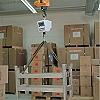
cranes: On our website you will find load cranes for the industry. Industrial load cranes have a big display for reading the weight properly.
Load
balances: On our website you will find load scales for the industry. Industrial load scales have a big display for reading the weight properly.
M
Margin of error for balances:
the uncertainty in measurements characterises the range in which you will find
the real measurement range.
Maximum weight range:
operating range for balances. Balances can be loaded up to the maximum load
limit.
Metrology: measurement discipline
of measurement units and systems. In the case of balances, it is directly
related with the calibration technique. Also see OIML
Metric carat:
a metric carat is 1ct = 0.2g. It is used for determining the weight of precious
stones.
Micro balances: Analytical
balances which can take a minimum load of between 5g and 50g, with a reading
capacity d = 0.001mg or higher.
Mixing components:
weighing different components in a receptacle allowing for them to be mixed, for
making recipes. >> Total net
N
Net weight:
weight of an object excluding packaging and or the transport container >>
Gross weight, >> Tare.
Newton:
the Newton (N) is a unit of force in the System International (SI). A body
accelerates at a force of 1 kg for 1m/seg².
Number of reference pieces:
number of pieces needed to obtain a representative weight reference for piece
counting. Usually between 5 and 50 pieces.
O
OIML:
International Organisation of Legal Metrology. This organisation regulates
the metrics of legal calibrations (Metrology). A link for the OIML
P
Package balances:
In the general index you will find package scales for mailing/shipping. With package scales you will be able to calculate immediately the weight of the object which is going to be sent. Package scales can be used for various purposes.
Paper
balances: On our website, you will find both mechanical and digital paper scales for professional weighing of sheets of paper in g/m² (in relation to a square meter of paper).
Pasteur tube: manual device that offers the possibility to measure the weight of small quantities of liquid.
Piece counting: if you weigh, for example, 10 equal pieces, the reference number of pieces is 10. Balances automatically determine the average weight by the quantity of pieces. From this moment, the identical components to count are referred to as pieces. A larger number of reference pieces results in a more accurate calculation.
Precision
scales: You will find precision scales in our general index. Our precision scales convince people by their accuracy, their wide weight range as well as by their high quality. Many of our precision scales have a built-in level to direct scales with a high precision an accuracy.
Prototype of the International kilogram: Also called 'the original kilogram' and it is the base unit for the mass. This piece of 1 kilogram is kept in Paris. It is the global standard for the metric system from which derive gram (g), milligram (mg) and ton (t).
PTB:
Physikalisch Technische Bundesanstalt in Braunschweig. This Federal Offices
responsible for the legal Metrology OIML in Germany. In the case of balances,
they regulate calibrations.
R
Re-adjust:
periodical testing and adjustment of balances by an authorised centre. Also see
'Duration of validity of calibration of balances'
Reading capacity d:
the smallest legible value on balances.
Recalibration:
periodical measurement of the method of measurement or control, to test its
correction.
Recovery of the national norm:
the ISO 9000 standard ensures that all measurements meet the defined tolerance
of the official standard. Also see 'International prototype kilogram'.
Reference weight:
the representative weight for piece counting equal components. Also see 'Number
of reference pieces'.
Repeatability:
(standard deviation) the coincidence of repeated measurements under the same
conditions. Usually 1d or less. Qualitative characteristic.
S
Scales for
carat: On our website you will find scales for carat for weighing both carats and jewellery. In some models of our scales for carat weighing units (grams or carats) can be chosen.
Semi-micro balances: analytical balances with a reading capacity d = 0.01mg.
Surface balances:
Mechanical and digital surface scales used to obtain the weight of a sheet of paper in g/m² are available on this site.
Balances with 'stand by': they partially shut down if not being used. This eliminates the start-up time when they need to be re-used, which saves time.
Balances with various ranges: balances with a variety of different weight ranges. Each weight range begins at zero and stops at the maximum load for the balances. Each weight range has its own reading capacity "d".
Start-up time: the amount of time from when the balances are turned on until it has reached its operating temperature. This is almost always indicated in the user's manual. Also see 'Changes in temperature'.
Systems (Hanging):
We offer you an overview of the hanging system which is ideal for both trading and leisure. Hanging system has almost all the weighing ranges (from 20 g to 10 t) and is equipped with a shockproof device.
T
Tare:
the possibility to reset the display to zero once a receptacle is placed on the
weighing pan. This can be done as often as required with electronic balances.
The tare is subtracted from the device's maximum weight range. For example: the
maximum weight range is 6000g, the tare (= a receptacle) 470 g, maximum
available weight range = 5530g.
Tare weight:
weight of the container or packaging of an object. Also see 'Gross weight' and
'Net weight'.
Temperature range: the range
in which balances can be used. If the balances are used in temperatures too high
or low, errors can occur.
Terrestrial forces:
destabilising influence on electronic balances. The balances should be adjusted
in an enclosure as the device's energy will be different at different points of
the earth.
Test weights: weights that
correspond with a measurement class of error limit M1 of the OIML. Used for
testing precision balances and industrial balances.
Thermo balances: PCE thermo balances have been designed for the industrial and professional sectors. Thermo balances can determine the remaining dry matter after a drying process with infrared energy of the original matter previously weighed, so humidity is calculated in relation to the weight of the wet matter.
Tolerance of a measuring device:
each device has an indicated tolerance to physical conditions. Tolerance defines
the most deviation allowed. Also see 'Error limit'.
Total net:
the possibility to put the weight in separate memory locations for making
recipes. The net total is the sum of weights of all the components, excluding
the weight of the receptacle and can be calculated at the press of a button.
V
Validation: document demonstrating that a process is more appropriate for performing a tare.
Verification: document demonstrating that the device has met with an established requirement.
Verifiable
balances: Our online offer includes a range of verifiable scales with a readability of 0.01 mg and available software.
W
Weight: the weight of a body is a physical magnitude. It is measured by the effect of the inertia of a change in velocity, such as an attraction to other bodies. Weight is always the same, independent of the effects of air and the attraction to the earth. The metric unit is the kilogram.
Weight differential: determination of the difference in weight of an object after a process, such as drying. Both weights are taken on the same scale under the same conditions.
Weight range tolerance: The upper and lower value limits are individually programmed into the balances either with weights or by using the keypad. To classify a luminous bar oscillates between value limits and an acoustic signal is emitted. Limit values are done in grams (g) per piece or percentage (%).
Weighing table: analysis balances and precision balances should exclude all sudden movements. The solid stone plates should rest upon wall mounted consoles or stable tables. Their horizontal position should not need to be modified.
Weight value: indicated by the balances after weighing. This is usually shown in either (g) or (kg). Results can be simply read or printed.
Wind screen: apparatus that protects the weighing pan against disruptive movements produced by the air flow. It is required by precision balances with a reading capacity d <10mg. It comes with all analytical balances.
Other sources: Balances
in the PTB
Data protection
Request a copy of our catalogue for balances (company copy).
Below we have a video of our company where you can observe where research, innovation and technical assistance are the most important services which we provide to our clients. If none of our balances are a solution to your problem, call us on: +44 (0)2380 987030 and one of our engineers will assess your needs and help you select the balances which best suit your requirements.
PCE
Instruments has tested some of our measuring instruments in the Antarctic.
Our aim was to ensure that our measuring instruments could resist extremely low
temperatures. In a recent expedition, we exposed some of our pocket and
laboratory balances to these conditions. Such extreme tests ensure that our
devices will function inside freezer units for prolonged periods of time.
If you wish
to view or print a selection of balances from our catalogue, click the PDF
symbol





 ication of balances (only for verifiable models) can be done by us
 (class II and class III) or by an authorised verification centre for class II. Once an authorised verification has been performed, the balances cannot be calibrated when using an external calibration weight.
























 UK customers +44(0) 23 809 870 30