
|
|||||||||
|
Colour Analysers Here you can see colour analysers from these companies:
Technical specifications for Colour analysers can be found at the following links: |
|||||||||
|
- PCE-RGB Colour Analysers |
  |
||||||||
|
- colourStriker Colour Analysers |
|
||||||||
|
- PCE-TCD 100 Colour Analysers |
 |
||||||||
|
- NH310 Colour Analysers |
  |
||||||||
|
- PCE-TCR 200 Colour Analysers |
 |
||||||||
|
- Sprektomaster
565 series Color Analysers |
  |
||||||||
|
- PCE-WSB 1 Colour Analysers |
 |
||||||||
|
|||||||||
|
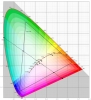
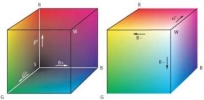
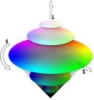
Information about the measurement of colour: Different colour spaces are classified by a coordinating system in which all of the different colours are represented by coordinates on an axis. Conditioned by the structure of the human eye and taking into account that it will be a human eye observing the colour, these colours are then placed on an axis. They are used in some 30 systems of colour spaces. The images above show the most important colour spaces. A fundamental problem of adjusting colours, in developing colour analysers, is the sensitivity of the human eye. The problem is that the colour spaces don't coincide with the perception of the human eye. When colours are mixed, problems exist in the perception of the area for the colour yellow. On the other hand, with a mix of colour dominated by the colour blue, you can simulate a lighter shade of colour to the human eye. To eliminate such problems they are used in conjunction with a colour analysist frequency in such a way as to fabricate different shades. The manufacturer of a product sends a product out to be painted or treated having agreed on using an established colour standard (such as RGB colour space), both possess the same colour analyser. The factory, follows the agreement, verifies the test output of the colour of the product and ships it as it meets the standard. They then continue with treating the product then check it against the frequency of its colour when it arrived. In cases where the result is contrary to the agreement, the two departments can communicate exactly about the difference in colours and use the same colour space in corresponding tests. |
|||||||||
|
Also visit our pages for Lux meters and Coating thickness meters. |
|||||||||
|
If you wish to view or print a selection of colour analysers from our catalogue, click the PDF symbol. |
|||||||||
 UK customers +44(0) 23 809 870 30 /





|
|
|
|
If you have any questions, call our offices on: |