
|
||||
|
Data Loggers Here you can see data loggers from these companies:
Technical specifications for our Data Loggers can be found at the following links: |
||||
|
- PCE-HT 71N Data Loggers |
|
|||
|
-
PCE-TD
60 Data Loggers |
 
|
|||
|
-
PCE-VM
31 Data Loggers |

|
|||
|
-
PCE-T
1200 Data Loggers |

|
|||
|
- PCE-MSR145 Miniature Data Recorder |
|
|||
|
- PCE-THB 40 Data Loggers |
 |
|||
|
- Log10
Data Loggers |
  |
|||
|
- Log 100/110 Data Loggers |
|
|||
|
- PCE-HT 110 Data Recorder |
|
|||
|
- PCE-THB 40 Multi Data Sampler |
|
|||
|
- TA-140 Data Loggers |
  |
|||
|
- PCE-VD 3 Data Loggers |
|
|||
|
- PCE-MSR165 series Multi Data Recorder |
|
|||
|
- PCE-HPT 1 Temperature Logger |
 |
|||
|
- Data
Loggers PCE-CLL 1 |
 |
|||
|
- PCE-WL 1 Wind Loggers |
|
|||
| - PCE-WL 2 Wind Loggers (for wind speed and direction, waterproof, storage on SD-Card) |
 |
|||
|
- PCE- FWS 20 Data Loggers |
|
|||
| - SMS-alarmsystem ALMIOG01 (SMS-alarmsystem for wireless monitoring of analogue and digital inputs, for normal SIM-card) |
  |
|||
|
- E105U-L module Data Loggers |
 |
|||
|
(simple modbus receiver for RS232 und RS485 data signals, up to 300 m, 2 frequencies, 10 channels ) |
 |
|||
|
- PCE-DM 22 Data Loggers |
|
|||
|
- PCE-T390 Data Loggers |
|
|||
|
- PCE-JR 911 Data Loggers |
|
|||
|
- PCE-228 Data Loggers |
 |
|||
|
- PCE-PHD 1 Data Collectors |
 |
|||
|
- PCE-313 series Data Loggers |
|
|||
| - RH-2 Data Logger (selection between dewpoint, absolute humidity, relative humidity, temperature, large display) |
  |
|||
|
- PCE-322 A Sound Level Data Collectors |
|
|||
|
- UV Data Loggers |
  |
|||
|
- PCE-SPM 1 Dataloggers |
 |
|||
|
- PCE-174 Data Loggers |
|
|||
|
- PCE-007 Data Loggers |
|
|||
|
- PCE-009 Data Recorders |
|
|||
|
- CDL 210 CO2 Data Recorders |
  |
|||
|
- PCE-AC 3000 Data Samplers |
|
|||
|
- Triple series Data Collectors |
  |
|||
|
- Gamma-Scout series Data Loggers |
|
|||
|
- Data Loggers |
 |
|||
|
Some models of Dataloggers are used to establish air and sea transport protocols. On the contrary, other sampler models are used to measure and control the industrial production sector or even the agricultural sector. So data loggers can be re-calibrated or not depending on how accurate they need to be. Calibrated data loggers can be continuously recalibrated using optional calibration systems or they can be regularly sent to our company to carry out a calibration and obtain a certification of calibration. Here, you will find a relation of data loggers diverse uses: General comments Data loggers are formed by a programmable processor, data memory, input ports for several sensors to be connected, etc. Data collectors have to have their own energy supply (by means of a battery or an accumulator). Measurement details are received through the sensor. An analogue to digital converter (ADC) turns the details into electronic data to record them inside the memory which can be then transferred to a memory card, an EPROM (Erasable Programmable Read Only Memory), a hard disc or other such device. When data is recorded the loss of details is prevented and a permanent copy can be created. Registered data can be transferred by means of the many ports of the data loggers (RS-232, USB, LAN, Bluetooth) to be analysed by the software. Depending on the different measurements, data recorders can have one or more channels connected to several sensors simultaneously. Data collectors are used when long term measurements are taken without any personal control on the site. So, dataloggers are mainly used in field tests, transport control (in lorries), food industry test, to analyse error systems (in oscillatory tensions or in a system), in quality studies, research and development. Apart from that, this instruments are also useful for private use. Usage All data loggers (both small size loggers and the others with sampling function) can be connected to a PC or a computer for the their configuration with the Windows Operating System (real time, measurement quote, start, stop). Not all dataloggers can be programmed in this way, so it is very important to read the technical specifications carefully. Data loggers first start with the measurement to store data in their internal memory. When the estimated time slot is achieved or the internal memory is full, then the data sampler is disconnected. Once this occurs, you will connect them to a PC to read and analyse measurement details.
|
||||
|
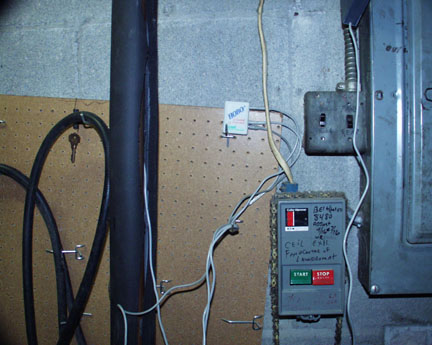
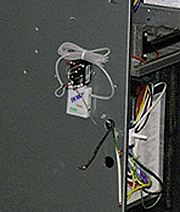
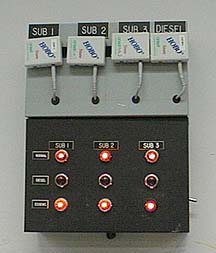
Example of an implementation of a data logger. |
||||
|
Images and information provided by our data recorders supplier Onset. |
||||
|
Indications to use the humidity parameter You must bear in mind that many of the data sampler sensors can suffer changes with the time, specially humidity sensors. Note: When data recorders are used with different input channels, their maximum memory capacity only refers to one channel. If you use a data logger with four input channels, maximum memory capacity has to be divided into four parts (example: four channels with a max. memory of 32000 Byte is 8000 Byte every channel). |
||||
|
Video of use with Data Loggers
|
||||
|
This anemometer comes with data logging function. The measurement values can be stored directly in the memory of the data logger and can be transmitted to the PC to evaluated later if requested (English software and data cable are included in delivery). Hence you can carry out measurement ranges on-site as well as analysis of the air measurements in the office. Thus you save time for the tedious notes of the values and avoid transmission errors. The external impeller (on 1.5 m cable) increases the mobility and flexibility with an exact measuring of air velocity. This anemometer with data logger belongs to the basic equipment of a ventilation technician for balancing and monitoring of ventilation systems. The lifetime of battery amounts approx. 50 hours with a battery, a current strength of 300 mA/h. If you wish to take a long-term record with the anemometer with data logger, which takes longer than 2 days, you have to use the battery pack or power adapter in these data loggers. |
||||
|
If you wish to print a selection of the Data loggers from our printed catalogue, click the PDF symbol. |
||||
 UK customers +44(0) 23 809 870 30 /



|
|
| You are currently at: Home / measuring instruments and test equipment / Data Loggers |
|
If you have any questions, call our offices on: |
|
This page in German |



 in Hungarian
 in
Bulgaria
in
Bulgaria  in Russian
  in Turkish


