|
Where is electromagnetic radiation created?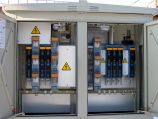 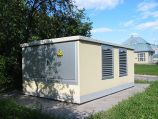 Below you will see two pictures with different places where electromagnetic radiation is created. Electromagnetic waves do not need any medium to expand themselves but even in vacuum they travel at the speed of light regardless of their own frequency. They are transverse electromagnetic waves that means that their propagation direction is always perpendicular to the oscillation direction of electromagnetic fields. So, our PCE-G28 series Gaussmeters offer a combined external triaxial probe. These Gaussmeters meet the European standard (European Union Electromagnetic Compatibility Directive IEC 801-1 (EN-50081-1) as well as the regulations regarding laboratory and measuring techniques IEC 204 (EN 60204)). These Gaussmeters can also be calibrated according to the DIN ISO standard. The coil magnetic field is highly increased by iron due to the fact that iron atoms (or the order of the atoms) are magnetic. In ordinary iron, magnetic axis of atoms are pointed in random directions and the sum of their magnetic fields is almost zero. When a current flows inside a coil, its magnetic field arranges a magnetic axis of core atoms and add its magnetism to the one created by the electric current making it much more powerful. Gaussmeters are essential onboard satellites and airplanes which map the local structure of the earth's magnetic field, i.e in the search of oil. Gaussmeters are also used in security doors to detect guns and in stores and bookshops where their products are magnetically labelled to be used as a protection against theft. The Navy uses Gaussmeters to detect submarines under water and to help surveyors to locate boundaries which cannot be seen. Gaussmeters are needed to protect the environment, in medicine, in geology, in the building sector, vocational training as well as for the safe transport of scrap, waste or rubbish. Below you will see two pictures with different places where electromagnetic radiation is created. Electromagnetic waves do not need any medium to expand themselves but even in vacuum they travel at the speed of light regardless of their own frequency. They are transverse electromagnetic waves that means that their propagation direction is always perpendicular to the oscillation direction of electromagnetic fields. So, our PCE-G28 series Gaussmeters offer a combined external triaxial probe. These Gaussmeters meet the European standard (European Union Electromagnetic Compatibility Directive IEC 801-1 (EN-50081-1) as well as the regulations regarding laboratory and measuring techniques IEC 204 (EN 60204)). These Gaussmeters can also be calibrated according to the DIN ISO standard. The coil magnetic field is highly increased by iron due to the fact that iron atoms (or the order of the atoms) are magnetic. In ordinary iron, magnetic axis of atoms are pointed in random directions and the sum of their magnetic fields is almost zero. When a current flows inside a coil, its magnetic field arranges a magnetic axis of core atoms and add its magnetism to the one created by the electric current making it much more powerful. Gaussmeters are essential onboard satellites and airplanes which map the local structure of the earth's magnetic field, i.e in the search of oil. Gaussmeters are also used in security doors to detect guns and in stores and bookshops where their products are magnetically labelled to be used as a protection against theft. The Navy uses Gaussmeters to detect submarines under water and to help surveyors to locate boundaries which cannot be seen. Gaussmeters are needed to protect the environment, in medicine, in geology, in the building sector, vocational training as well as for the safe transport of scrap, waste or rubbish.
|




 UK customers +44(0) 23 809 870 30