Photometers (Multi-function) We have a great selection of photometers to measure many different parameters of water in industry, laboratories, countryside, pools etc
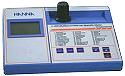
On our website we have 4 digital multifunctional photometers for water analysis (spare components and reagents included). If required, we can also offer you photometers for other parameters of water. The photometers are powered by batteries or connected to the mains at 230 V (with adapter). The control of water quality with solid devices is becoming more and more important nowadays, just as the photometers to measure different parameters. These phtotometers release laboratory staff of daily water analysis. The photometers to determine the chemical need of oxygen are specially requested due to their use. If you have questions about the photometers, you can contact us at: UK customers +44(0) 23 809 870 30 / US customers (561) 320-9162 . Our technicians and engineers will be happy to advise you on these and other photometers, and of course, on the other products of our range (regulation and control, scales and balances.).
Here you can see
moisture testers for wood
from this company:
The technical specifications of the Photometers (Multi-function) can be found on the following links:
- Photometers (multi-function) - pisciculture (Multifunctional photometers for key parameters in fish farming)
- Photometers (multi-function) - pools (Multifunctional photometers for daily control in pools and bathrooms)
- Photometers (multi-function) - Industry (Multifunctional photometers to measure up to 45 parameters, software, and RS-232 interface for data transmission)
- Photometers (multi-function) - Oxygen (Photometer to determine the chemical oxygen demand and other parameters)
You can also visit our multifunctional photometers webpage
The measuring principle is very simple photometers. The combination of reactive components of water and produces a characteristic colour. Photometers send light through the sample with a given wavelength. A photocell detects the intensity of the irradiated sample and compares the result with the output. Absorbed radiation is transmitted and calculated concentration. Below is an outline about it.
Photometers create the light needed by means of a diode with energy savings. These devices are easy to use and can be offered with a hanheld variant. Photometers measure the intensity (I) of the light beam directed through the filled cuvette by means of the photocell. The measurement is compared with the last known output current (Io). The portion of light striking the photocell is converted into an electric current and it is driven through a digital analog transformer of the measurement of electronics. Here you determine the amount of absorbed radiation and the concentration. Lambert law - Beer 'sche establishes a mathematical relationship between extinction E and the concentration c of water content: A = log Io / I. Absorption is defined as follows: A Lambda cd = € (€ Lambda = extinction coefficient, c = molar concentration of the substance, d = thickness of the cu-beta). The extinction measured with photometers E is proportional to the concentration of water content. The extinction depends only on the concentration of a given factor and a constant thickness of the cuvette. The law has unlimited validity, but it starts with a light single wavelength, known as the monochromatic light. If the selected wavelength is within the visible range (400 ... 800 nm), the measurement with the photometer should take place in a dark place for the photometer to determine the correct amount of incident light and not be influenced by the sun. Before starting a series of measurements, you must perform a reset by means of a test strip. To do this, you should fill the bucket with the sample test to analyse and adjust the setting by pressing the "ZERO" in the photometer.
If you wish to view or print a selection of photometers from our catalogue, click on the PDF symbol.



 UK customers +44(0) 23 809 870 30 /
